Why Inquiries Get Lost in the Evening and at Weekends, and What It Costs You
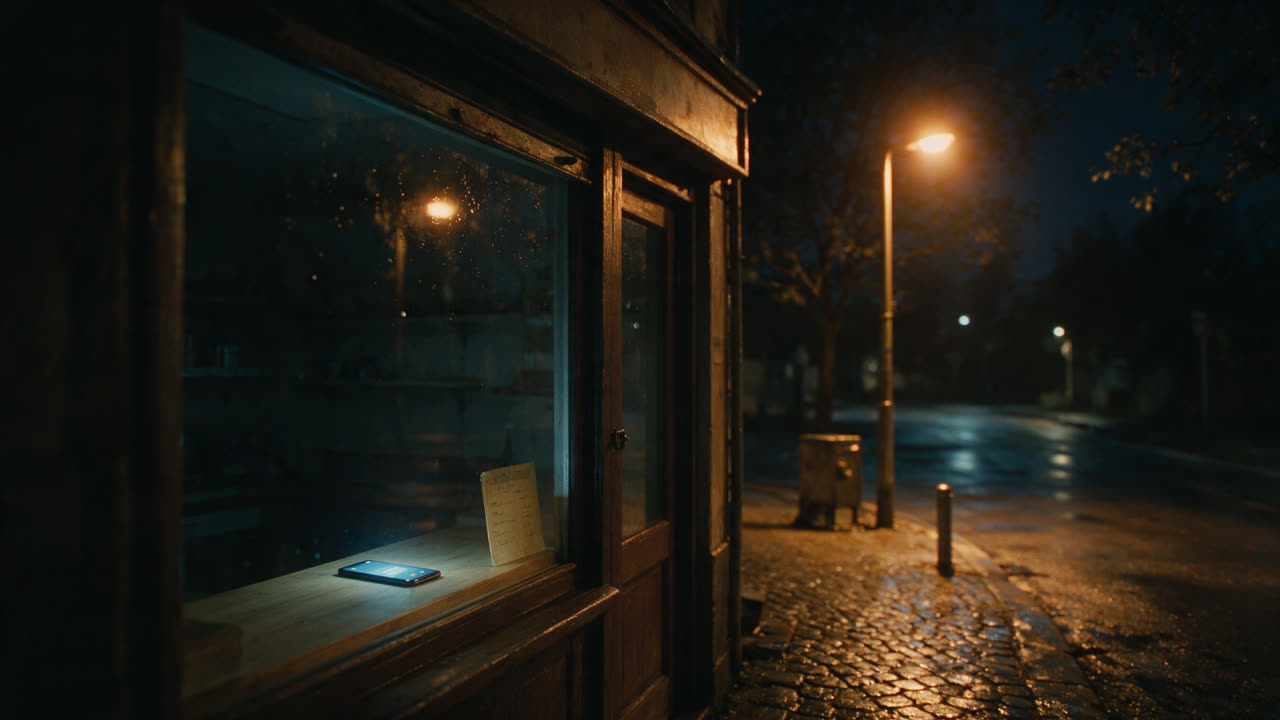
A customer opened your site on Thursday at 21:40, left an inquiry and went to bed. A manager saw it on Friday at 10:00 and called. The customer did not pick up because they were at work. Called back at lunch, had a chat, agreed to talk on Monday. On Monday the customer said they had already found someone else.
This looks like an isolated story, but it is exactly what a noticeable slice of lost revenue is made of in almost any service business. Let us look at why it happens and how to turn it into money you can count.
How many inquiries arrive when nobody is working
The first thing to do is look at your own statistics by hour. Not by feel, but from the form or the CRM.
The picture is similar for most businesses. The peak is late morning and early evening, but a significant share arrives after the office closes: people deal with personal matters exactly when they are free from their own work. Plus all of Saturday and Sunday.
Work out your own share. Take a month of inquiries and split them into working hours and outside them. Even if it comes to a fifth, that is a fifth of your flow that you talk to twelve hours late or worse.
Why the customer does not wait
The logic of "they left an inquiry, so they will wait" held when leaving an inquiry was work. Now it takes three seconds, and people rarely write to you alone.
- They did not write only to you. They opened several tabs and left an inquiry in three places. From there a simple rule applies: the conversation goes to whoever answered first, not to whoever would have answered best.
- The decision cooled. The urge to buy or order has a short shelf life. In the evening the person was ready; by morning they have other concerns.
- Silence reads as an answer. No reaction is understood not as "they are asleep" but as "they do not care". Especially if your site promises a fast reply.
Response speed affects the outcome more than the quality of that response. A short "I see your request, I will come back in the morning" at 21:41 works better than a detailed letter at 10:00.
Putting the loss into money
As long as this is a feeling it changes nothing. Convert it into a figure. You need four numbers and you have all of them.
- A - inquiries outside working hours per month. From your statistics, not from memory.
- B - what share of them never reaches a conversation. Compare the "inquiry to conversation" conversion for daytime and night-time inquiries. The gap between them is the loss.
- C - conversion from conversation to deal. Your usual daytime figure.
- D - profit on one deal. Average order value minus cost.
Multiply A by B by C by D. That is what the business loses every month simply because nobody answers at certain hours. Multiply by twelve and it becomes clear whether this is worth dealing with at all.
One important caveat: count profit, not turnover. Turnover makes a prettier number, but you cannot make decisions on it.
Different channels get lost differently
A single loss figure hides something important: channels behave differently and are fixed differently.
A form on the website
The most vulnerable channel. The person left a contact and walked away with no feedback at all. They do not know whether the inquiry even arrived, and an hour later they calmly leave one with a competitor. An automatic reply gives the biggest gain here, because right now there is emptiness in its place.
Messengers
More forgiving: the person sees the message was delivered and will wait until morning. But there is another trap here - the conversation is often held on a staff member personal phone, so the inquiry lives only with them. They quit, lose the phone or go on holiday, and the trail disappears with them.
Calls
A missed evening call usually never gets returned at all, on the assumption that "if it mattered they would call back". For most businesses this is the most underestimated source of loss, precisely because missed calls are never recorded as inquiries anywhere.
Start with the channel that currently has no reaction at all. Improving a reply from two hours to five minutes gains less than replacing complete silence with any sensible answer.
How to test the idea in a week for free
Before deploying anything, make sure the problem exists in your case. This is done by hand and costs almost nothing.
- For one week, answer every evening inquiry within half an hour. By hand, taking turns with a colleague, however works. The goal is not to build a process but to collect data.
- For the second week, work as usual. Morning replies, nothing changed.
- Compare the two weeks on one figure: the share of inquiries that reached a conversation. Not sales - the sample is too small and randomness will distort it.
If the difference is noticeable, you have just measured the benefit of automation on your own customers rather than on someone else promises. If there is no difference, you have saved hundreds of thousands of roubles and know to look for the cause elsewhere.
A full worked example
So the formula does not stay abstract, here it is on an imaginary workshop. The numbers are invented for the example; substitute your own.
- Inquiries per month: 200, of which 60 arrive outside working hours.
- Daytime ones reach a conversation in 80 cases out of 100, night-time ones in 45. The gap: 35 per cent.
- So about 21 inquiries a month are lost.
- One in four conversations becomes a deal: about 5 deals.
- Profit per deal 8 thousand roubles.
That is around 40 thousand roubles a month, nearly half a million a year. At those numbers an assistant for 200 thousand pays back in five months. At a tenth of the volume it never pays back - and that is equally useful to learn before signing.
What people usually try, and what actually works
Managers on evening duty
Works while it lasts. The problem is that it is the most expensive option and the most fragile: people fall ill, quit, get tired of answering on their day off. Within two months the rota quietly stops being observed and you find out by accident.
An auto-reply saying "we have received your inquiry"
Better than nothing, but not by much. Such a message reads as a receipt rather than an answer: it addresses none of the customer questions and does not stop them going elsewhere. It only helps when paired with a promised deadline that you actually keep.
A form promising "we will call back in 15 minutes"
A dangerous option. If the promise is not kept outside working hours it works against you: what the customer remembers is not that you are fast but that you do not keep your word.
An assistant that answers by itself
This is where an actual solution appears: the customer gets a substantive answer immediately, and in the morning the manager sees not a bare contact but a conversation with details. What that costs and what makes up the price is covered in the breakdown of AI assistant pricing.
What a night-time reply must do to count as a reply
Not every automatic reaction closes the gap. Check against this list.
- Answer the question rather than acknowledge receipt. If someone asked about price, they should get a price range, not "a manager will contact you".
- Admit when it does not know. An invented answer is worse than an honest "I will check that with colleagues in the morning".
- Ask clarifying questions. In the morning the manager should receive not "interested in a renovation" but what exactly, where and when.
- Name a deadline and keep it. "Igor will call you before eleven" beats "we will be in touch".
- Be able to hand over immediately. If the customer is annoyed or the case is complex, the assistant should step back rather than argue.
What you can do tomorrow for free
Automation is not the only move, and not the one to start with. Half the losses close with organisational fixes in a single evening.
- Remove promises from your site that you do not keep at night. "We reply in 15 minutes" without a night shift works against you.
- Say honestly when you will reply. "Inquiries after 20:00 are picked up in the morning, answered by 11" is respectful, and people are more likely to wait.
- Check where inquiries actually land. Surprisingly often it turns out form emails go to spam and the messenger is tied to the phone of someone who left in the spring.
- Put all channels in one place. While inquiries live in five different places, no automation will help: it will add a sixth.
- Return missed calls. First thing in the morning, before everything else. This costs nothing and usually has the most visible effect on the list.
If losses remain significant after these steps, then it makes sense to budget for an assistant: you will be buying a solution to a real problem rather than a substitute for putting your house in order.
How to tell the gap is closed
A month after launch compare two things with what came before.
- Conversion of night-time inquiries into actual conversations. It should move towards the daytime figure. If the gap stays the same, the problem was not response speed.
- Time to first response. Use the median, not the average: one inquiry handled after three days will ruin the average and hide the real picture.
And read transcripts by hand, at least ten a week. Metrics will show that an answer happened, not that the answer was any good.
When the problem is not speed
Before investing, make sure you are fixing what is broken.
- If daytime inquiries get lost too, the issue is the handling process, not the hour of day.
- If customers reach a conversation but do not buy, the problem is the offer or the price, and a fast reply will only speed up the refusal.
- If there are few inquiries at all, start with being found rather than with handling five a week at night.
In short
An inquiry left in the evening does not compete with your morning - it competes with a competitor reply that arrived a minute later. Work out your share of out-of-hours inquiries and the conversion gap against daytime ones: that is the price of silence.
If the figure is significant, the next question is what to close the gap with: a simple bot or a full assistant, and how to make sure the morning brings not a list of contacts but inquiries already sorted by readiness.
Need an AI system or a video for your business?
Describe your case — we will come back with a proposal and an estimate within a day.
Discuss your case